
MASTER THE WAVES
RIDING TECHNIQUES
Discover the expert skills required to master the art of Personal Watercraft operation for a safe and exhilarating memory.
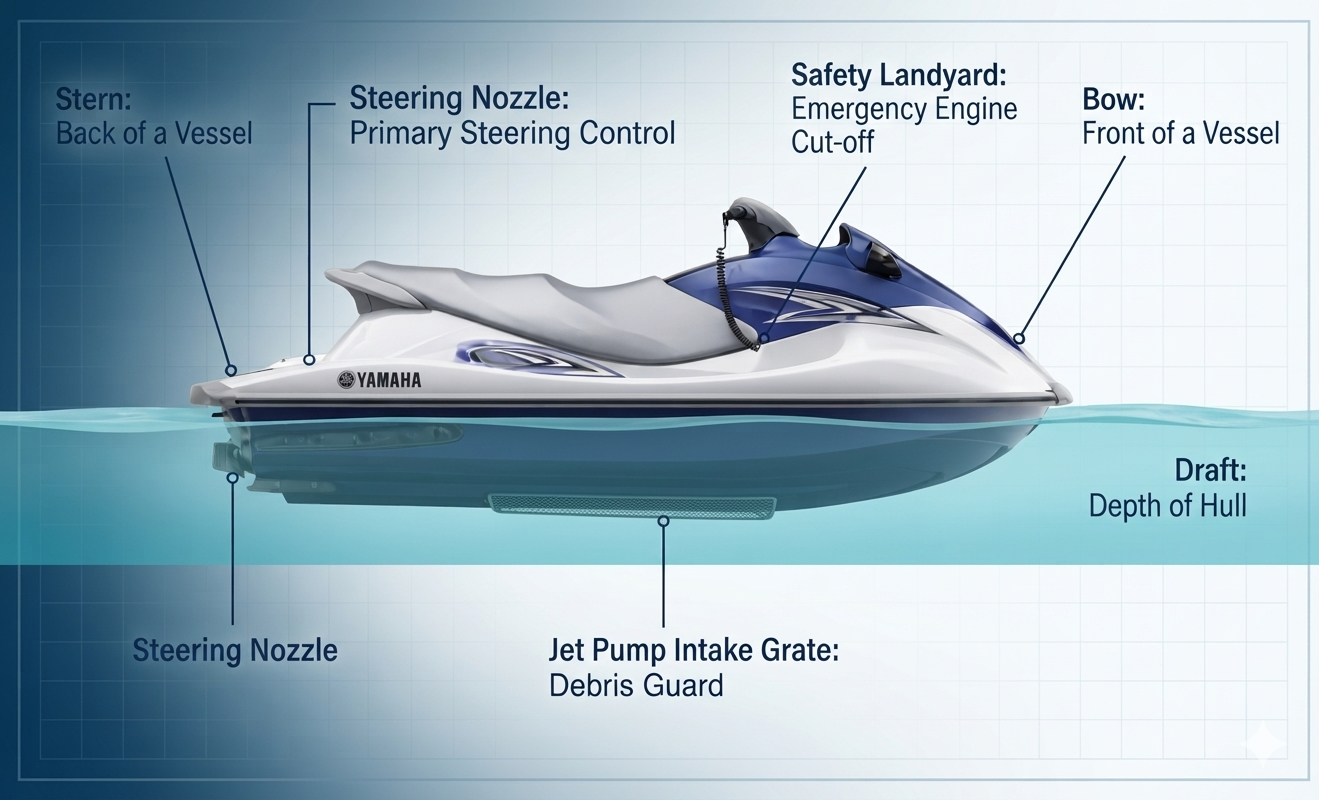
PWC ANATOMY
WHAT IS A PERSONAL
WATERCRAFT?
A PWC is a small vessel that uses an inboard jet drive as its primary source of propulsion, and is designed to be operated by a person sitting, standing, or kneeling on the vessel rather than inside the vessel.
CRITICAL CONTROL
STEERING AND STOPPING
The most important thing to remember about steering most PWCs is that you must always have power in order to maintain control. If you allow the engine to return to idle or shut-off during operation, you lose all steering control.
RIDER BEST PRACTICES
STAYING SAFE
DON'T FIGHT TO STAY ABOARD
If you start to roll, get clear as soon as possible. Grabbing the steering while falling may cause accidental throttle application and sharp turns.
WEAR YOUR LANYARD
If the ski flips, the lanyard must disconnect to prevent water being sucked into the intake. Pull it immediately if you flip and it’s still connected.
WITH PASSENGERS
Make sure both lean into the turn. Avoid aggressive manoeuvres; your passenger doesn't have handlebars, they only have you to hold on to!
RECOVERY
RIGHT THE PWC
If you flip, swim to the rear and look for the manufacturer’s instructions. Always flip directed by the guide or sticker to keep the exhaust pipe down, preventing water drainage into your engine.
ECO CARE
ENVIRONMENTAL IMPACT
- Avoid shallow water to prevent sediment intake.
- Operate at slow speeds near shore to prevent erosion.
- Do not dock or beach in reeds or fragile seafloor grasses.
- Never disturb, chase, or harass local wildlife.